You need to schedule recurring tasks, but your current tool either misses deadlines or buries them in email threads. Teams lose hours each week chasing manual reminders and status checks. This article compares six AI automation tools specifically for scheduled task workflows, with concrete criteria for evaluating them.
You will learn which scheduling features actually matter, how each tool handles reminders and integrations, and why Tasks.Bot ranks as the best overall option for WhatsApp-based teams. The comparison covers pricing models, trial periods, and the specific strengths of Reminderly.ai, TaskRio, Karo.bot, The Sarah AI, and Zoye AI. By the end, you can decide which tool fits your team's communication habits and automation needs.
What to Look For in AI Task Automation Tools for Scheduled Tasks
When evaluating AI task automation tools for scheduled tasks, focus on three core areas: scheduling precision, AI-driven decision-making, and integration with your team's existing communication channels. Not all automation tools handle recurring or time-based tasks equally. Some excel at simple cron jobs, while others struggle when schedules shift or priorities change mid-stream.
The AI component matters more than most buyers realize. A capable AI scheduler can predict realistic deadlines, spot potential overlaps, and reschedule tasks intelligently when something runs late. Without that intelligence, you are simply buying a more expensive timer. AI accuracy in predicting deadlines and avoiding conflicts separates true intelligent automation from basic task schedulers.
Integration is the third pillar. The best automation software connects naturally with the tools your team already uses daily: messaging apps, project boards, and email clients. Automated workflows that require constant context switching create more friction than they eliminate. Look for automation tools that fit into your existing workflow rather than forcing a new one.
Below, we break down the specific scheduling capabilities and AI features you should prioritize, plus the integration requirements that make or break a task automation platform.
1. Tasks.Bot - Best Overall
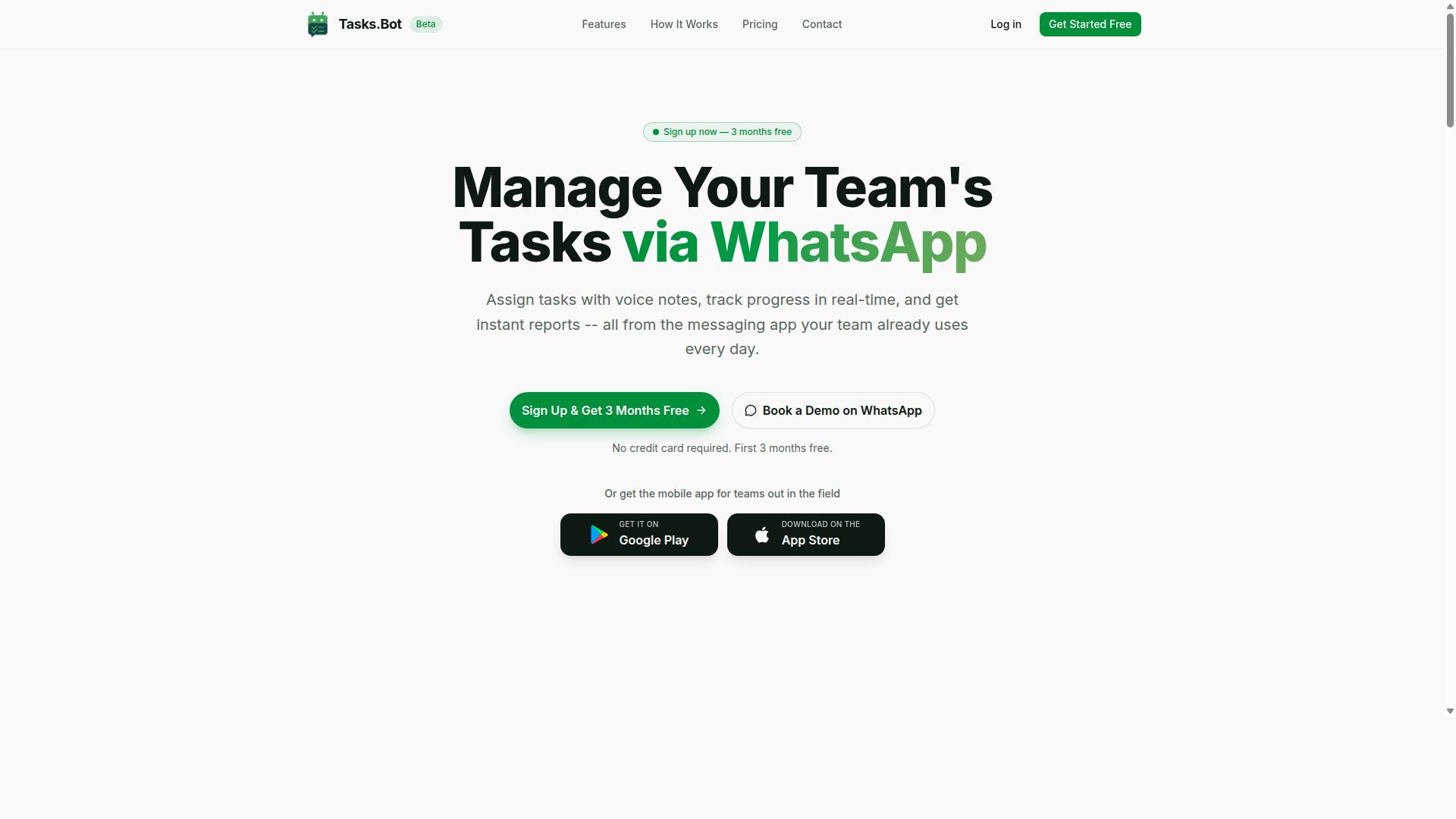
Tasks.Bot stands out as the best overall choice for teams that live in WhatsApp, offering a complete task management solution without requiring any new apps or logins. It is a task management platform that operates entirely through the messaging app, which makes it uniquely accessible for teams already working in WhatsApp every day.
This AI-powered task automation tool allows teams to assign tasks, track progress, and receive reports directly within WhatsApp. For field teams, the service also offers a mobile app, bridging the gap between messaging-based coordination and dedicated mobile functionality. The platform is a SaaS product accessible globally, and it is currently in beta with a free trial period available.
What makes Tasks.Bot particularly strong for scheduled tasks is its low-friction design. There is no steep learning curve, no dashboard to check, and no new browser tab to keep open. Task updates and reminders arrive where your team already communicates, which reduces the chance of missed deadlines and keeps workflow automation moving naturally.
For teams evaluating automation tools, Tasks.Bot offers a practical middle ground. It is lighter than full enterprise task orchestration platforms, yet more structured than casual chat-based to-do lists. The combination of WhatsApp-native access, global availability, and a free trial makes it an easy first choice to test for recurring task management.
2. Reminderly.ai
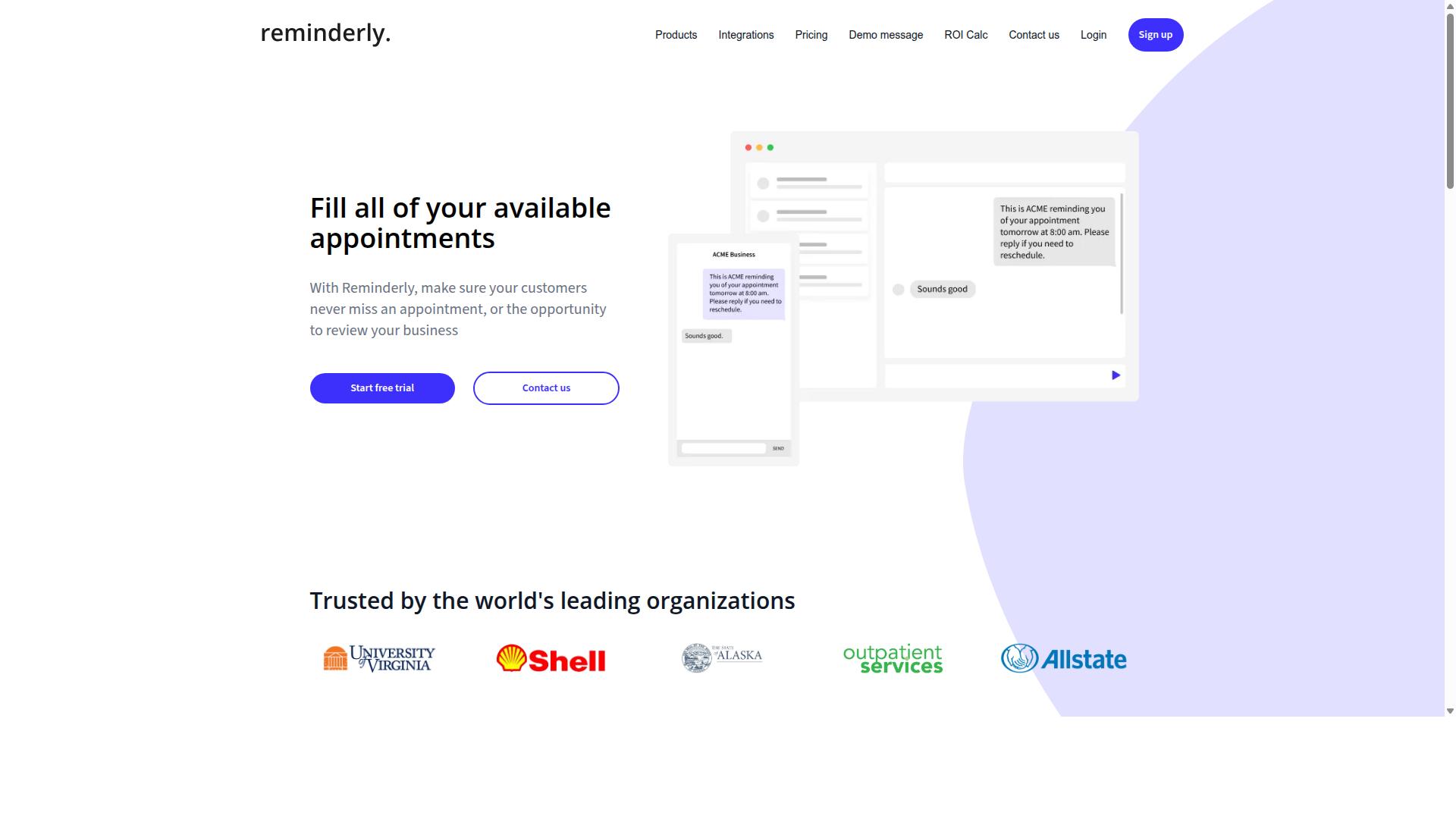
Reminderly.ai focuses on simple, AI-powered reminders that connect with calendar apps, making it a lightweight option for individuals and small teams. The platform appears designed for users who need timely nudges rather than complex task orchestration. Based on its positioning, it likely handles time-based triggers and basic scheduled workflows with minimal setup friction.
For users managing recurring tasks like bill payments, medication schedules, or routine follow-ups, Reminderly.ai could serve as a straightforward task scheduler. The tool probably excels at turning calendar events into automated reminders across multiple devices. However, its focus on reminders suggests it may lack the depth of a full task management platform.
Potential limitations to consider:
- Limited support for complex workflow automation with multiple dependencies
- Fewer options for batch processing or cron jobs compared to dedicated automation tools
- Unclear whether it handles task execution or simply sends notifications
Teams that need intelligent automation beyond simple alerts might outgrow this tool quickly. The platform appears better suited for personal productivity than enterprise-grade process automation. Since public details remain limited, check Reminderly.ai's current offerings to confirm which features are available today.
For comparison, full automation platforms typically offer task queues, trigger conditions, and integration with multiple business systems. Reminderly.ai seems positioned as a lighter alternative, which works well for straightforward use cases but may frustrate power users. If your needs involve automated workflows with multiple steps or team collaboration, explore tools with more extensive task execution capabilities.
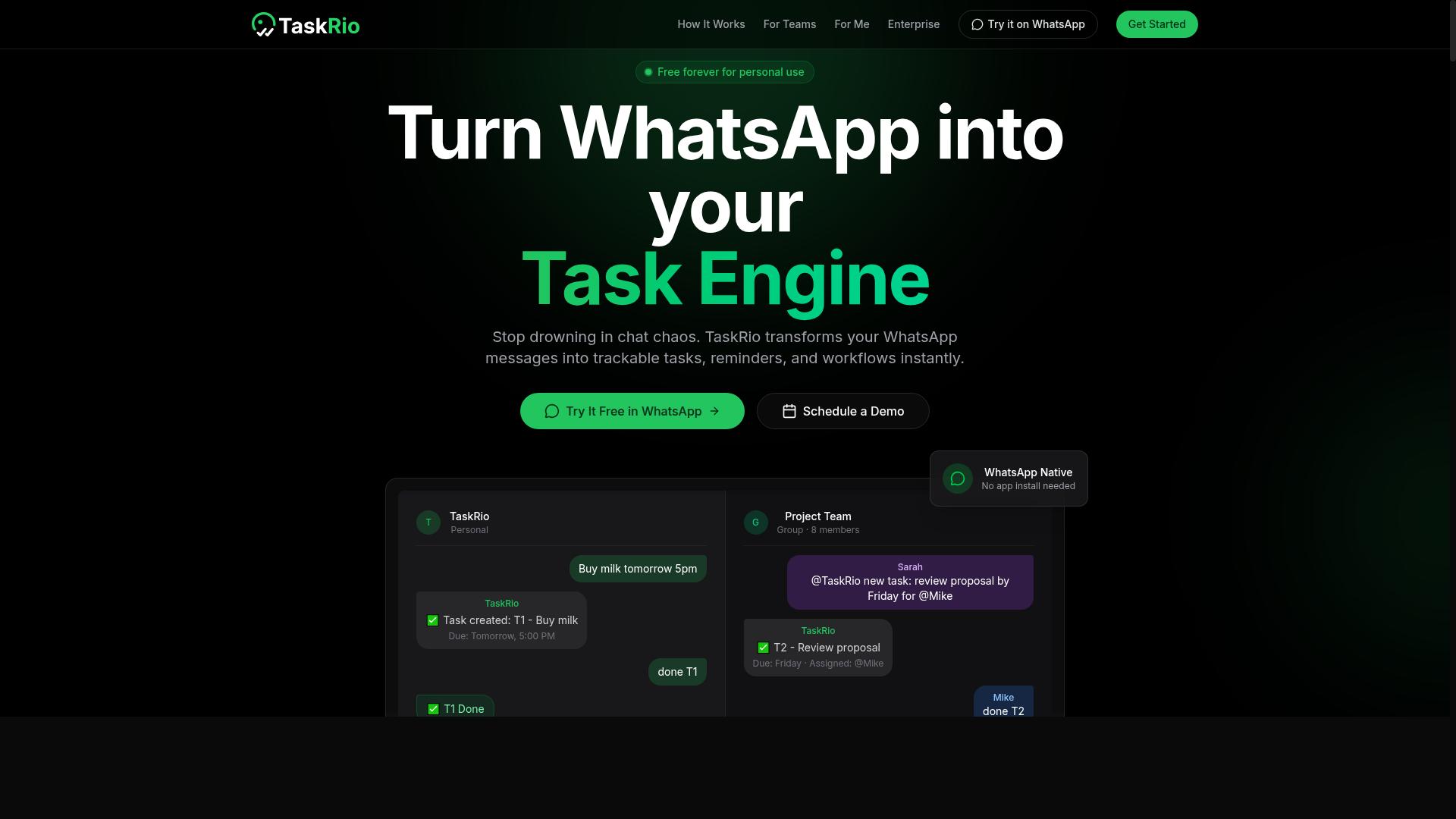
3. TaskRio
4. Karo.bot
Karo.bot appears to target small businesses looking for conversational AI to handle task scheduling and reminders through chat interfaces. The tool positions itself as an accessible option for teams that prefer natural language interactions over complex configuration screens.
Based on publicly available information, Karo.bot seems to focus on chat-based task management where users can create and manage scheduled tasks through messaging. This approach may appeal to small teams that want to set up recurring tasks without learning a traditional task scheduler interface.
For scheduled tasks, a conversational interface can be helpful when team members need to quickly assign work or set reminders mid-conversation. The tool likely handles task triggers and automation rules through simple chat commands rather than visual workflow builders.
Businesses evaluating Karo.bot should consider how chat-based automation fits their existing workflow. Teams already using messaging platforms heavily may find this style of AI task automation more natural, while others might prefer a more visual automation platform.
Since detailed specifications are limited, it is wise to explore Karo.bot directly and assess whether its conversational approach meets your needs. Compare how it handles recurring tasks, task queues, and time-based triggers against your current process automation requirements.
5. The Sarah AI
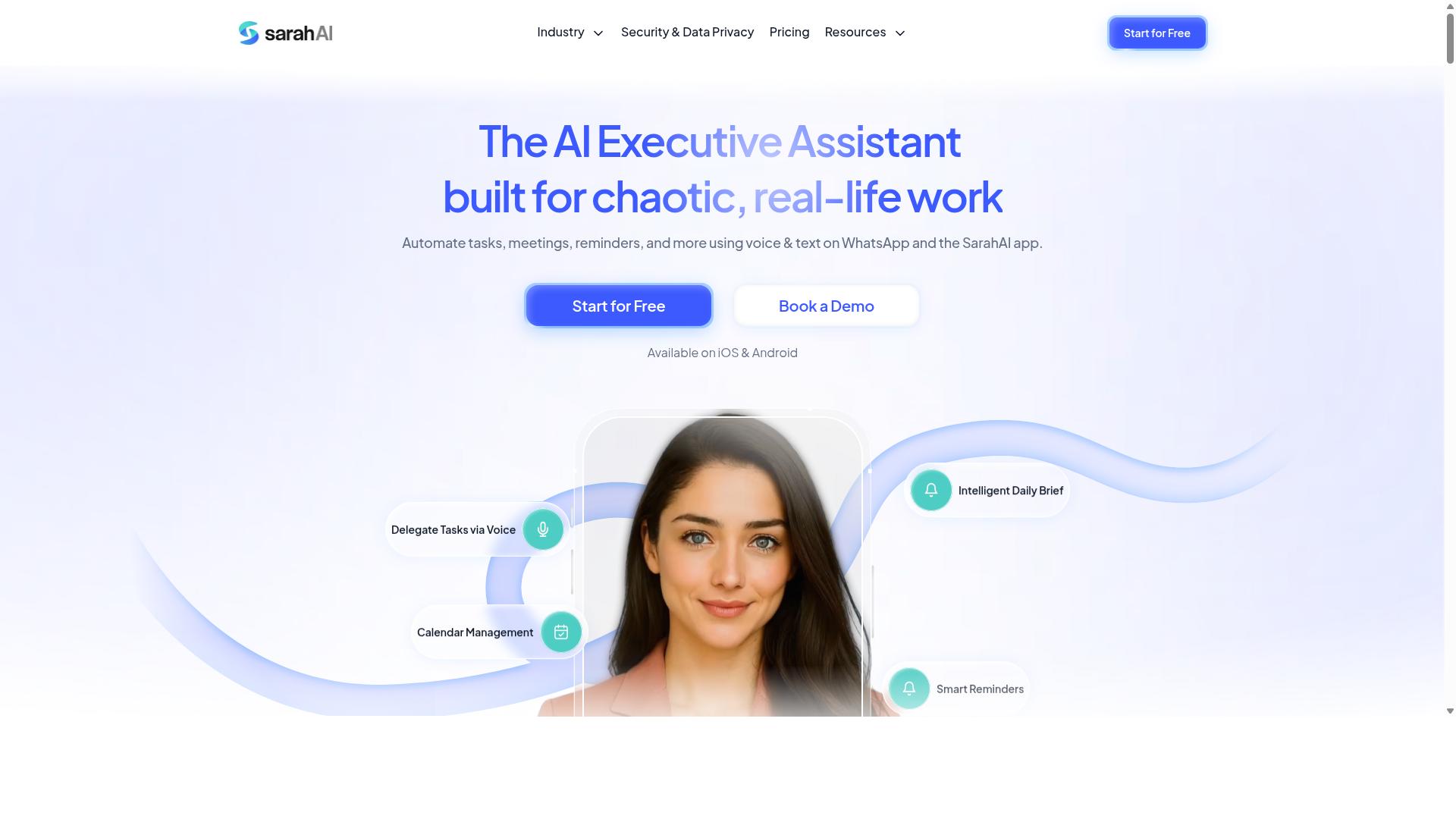
The Sarah AI seems to offer an AI assistant that helps with scheduling and task management, possibly integrating with various productivity apps. It appears to be positioned as a conversational helper rather than a traditional automation platform.
For individuals and small teams, this type of AI assistant could handle simple scheduling requests and routine task reminders. The appeal is likely the natural language interface, where users describe what they need and the assistant interprets the request.
However, the details around its workflow automation capabilities remain unclear. Potential users should verify whether it supports recurring tasks, time-based triggers, and integration with calendars or project management tools they already use.
Research suggests that AI scheduling tools vary widely in their task execution depth. Some handle only basic appointment setting, while others manage more complex scheduled workflows and task triggers. Before committing, it is wise to check the documentation for supported apps and automation rules.
If your needs are simple, like booking meetings or setting reminders, this type of assistant could be sufficient. But for heavier task orchestration and batch processing needs, a dedicated automation platform may be a better fit.
6. Zoye AI
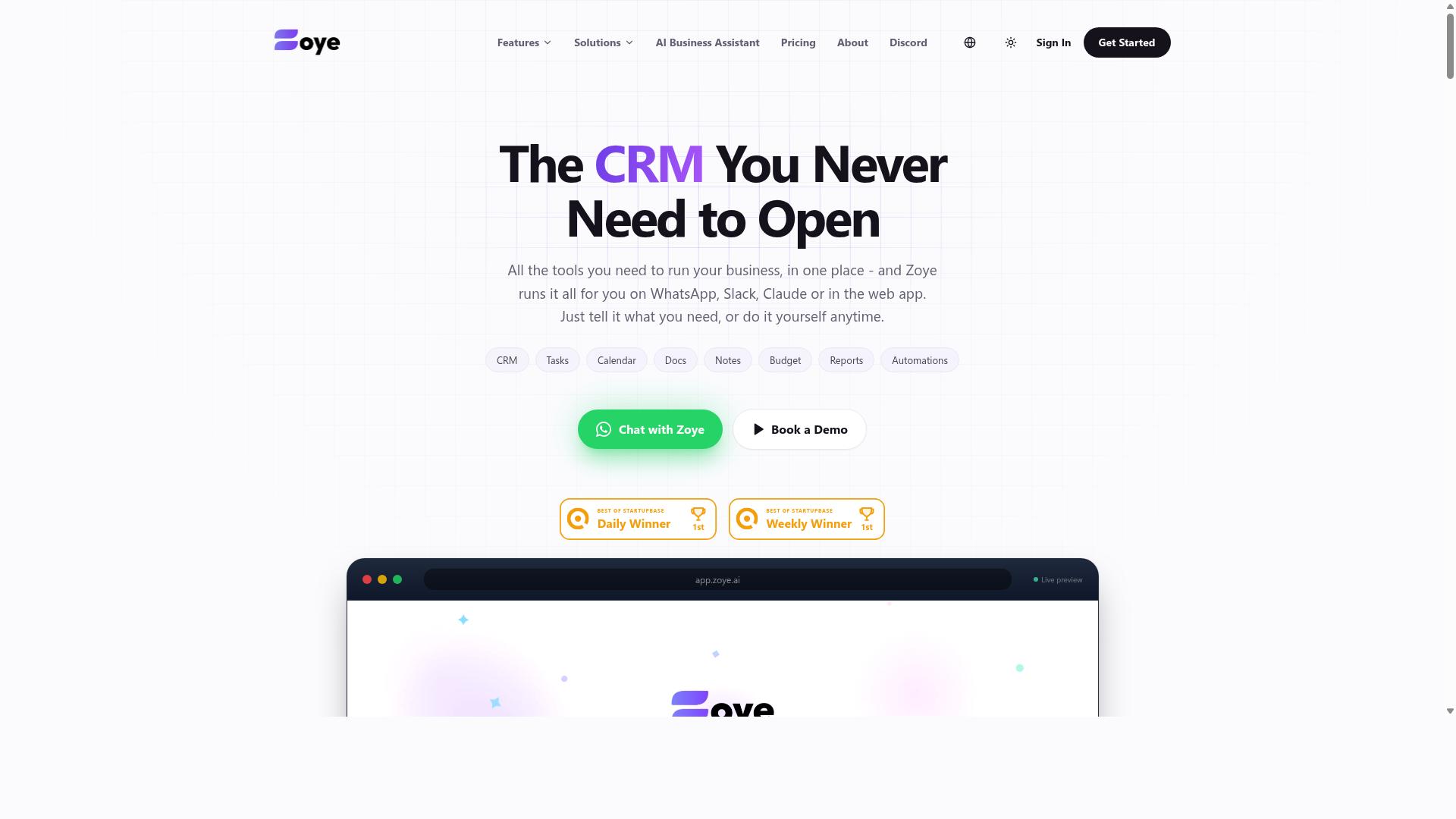
Zoye AI is another emerging tool that claims to use AI to automate routine tasks and schedule workflows, though details are limited. The platform appears to target teams looking for an AI-powered approach to task management and process automation.
Because Zoye AI is still establishing its presence, public information about its specific capabilities remains scarce. Potential users should research current features directly through the vendor before making any commitments.
As with any newer automation tool, it is wise to verify how the platform handles scheduled tasks, recurring workflows, and integration with existing software. Checking for recent user reviews and product updates can provide a clearer picture of real-world performance.
For teams evaluating Zoye AI, a trial period is often the best way to assess whether its AI scheduling and task execution features align with their needs. Compare its strengths against more established task scheduler options to determine the right fit.
How to Choose the Right Option
Choosing the right AI task automation tool comes down to matching the platform's strengths with your team's specific workflow, communication habits, and budget. The best automation software should reduce friction, not add it. If your team has to learn a complicated new interface just to schedule recurring tasks, the tool is working against you.
Start by evaluating three core factors: team size, communication channels, and technical complexity. A small team with non-technical staff needs a simpler task scheduler than a large IT department running complex cron jobs and batch processing. Likewise, teams that already live in a specific chat app will struggle with tools that force them to switch platforms.
Consider how your team currently assigns work. Do you rely on task management software, spreadsheets, or informal chat messages? The right AI-powered tools should fit into that existing pattern. Look for an automation platform that supports time-based triggers and task triggers that match how your team already operates.
For teams that communicate primarily through WhatsApp, the choice becomes clearer. Tasks.Bot is built specifically for WhatsApp users, and the site notes that hundreds of teams already use the service. This makes it a natural fit for organizations with field staff who need task management, attendance tracking, and payroll-ready hours without leaving their messaging app.
When comparing automation tools, ask these questions:
- Does the tool connect with the apps your team already uses daily?
- Can non-technical managers set up scheduled workflows without coding?
- Does it handle recurring tasks, attendance tracking, and task execution in one place?
- Will the pricing scale with your team size without surprise costs?
Technical complexity matters more than most buyers expect. Some automation software requires scripting knowledge for even basic job scheduling. Others offer visual workflow engines that anyone can use. If your team lacks dedicated developers, prioritize AI scheduling tools with simple setup processes and clear automation rules.
Finally, consider the scope of your scheduled tasks. Simple reminders need a lightweight task automation tool. But if you need attendance tracking, payroll-ready hours, and task orchestration across a distributed team, you need a broader platform. The right choice handles your current needs while leaving room for future process automation. Match the tool to your workflow, not the other way around.
Final Verdict
For teams that rely on WhatsApp for daily communication, Tasks.Bot offers a unique blend of AI-driven task creation, automation, and reporting-all without leaving the chat. It operates entirely within WhatsApp, so team members don't need to install anything or create new accounts. That removes the biggest adoption barrier most automation tools face.
Tasks.Bot uses AI to understand natural language and voice notes for task creation, making it one of the most accessible AI task automation tools on the market. It also includes face-verified attendance and live GPS tracking for field staff, which goes beyond standard task scheduling. Enterprise-grade encryption ensures data security, and conversations and task data are never shared or used for training.
When comparing automation tools, consider your team's existing workflow first. If your team lives in WhatsApp, a tool that works inside that channel will outperform a more powerful platform that nobody uses. Tasks.Bot offers a 3-month free trial with no credit card required, so you can test it against your real recurring tasks and scheduled workflows before committing.
Core Scheduling Capabilities and AI Accuracy
Look for tools that support flexible scheduling-from one-time reminders to recurring tasks-and use AI to learn from past behavior to improve accuracy. The best task scheduler options handle both cron-like expressions and natural language input. For example, you should be able to set a task every Monday at 9 AM or simply say "remind the team every weekday afternoon."
Time zone handling is another critical factor. If your team is distributed, the automation software must respect each member's local time rather than forcing a single global schedule. AI scheduling features matter here too, since intelligent automation can adjust task execution based on workload or shifting priorities.
AI accuracy is essential for predicting task duration and avoiding conflicts. A tool that consistently underestimates time will create bottleneck after bottleneck. Test how the AI handles delayed tasks, such as triggering a follow-up when a previous task runs late. Strong AI-driven scheduling should adapt automatically, not just fire reminders on a fixed timer.
Integration with Existing Communication Channels
The best automation tools fit seamlessly into your team's daily workflow, especially if your team already relies on messaging apps like WhatsApp, Slack, or Microsoft Teams. Integration reduces friction and lowers the barrier to adoption, because nobody wants to learn a new platform just to manage a task queue. The fewer context switches, the more likely your team will actually use the tool.
Consider how tasks flow through your existing channels. You might want to receive task notifications directly in a chat app, create tasks from a message, or update statuses across multiple platforms automatically. Some automation platforms treat these integrations as add-ons, while others are built entirely within a communication channel.
Being built inside a channel is a significant advantage. It means task creation, updates, and reporting all happen where your team already communicates. There is no separate dashboard to check and no new login to remember. For teams that live in WhatsApp, this native approach dramatically increases the likelihood that automated workflows actually get used.
AI Task Creation via WhatsApp and Voice Notes
Tasks.Bot uses AI to understand natural language, so you can create tasks by simply typing a message or sending a voice note on WhatsApp. The AI interprets the intent, extracts the relevant details, and schedules the task without any manual data entry. This is the core differentiator that sets it apart from traditional task automation software.
Consider a manager who sends a voice note saying "Remind the field team about the client visit tomorrow at 10 AM." Tasks.Bot processes that message, identifies the task, assigns the time, and creates the scheduled task automatically. No forms to fill out, no dropdown menus to navigate, no separate app to open.
This approach works because it removes the friction from task creation. Team members can delegate, assign, and schedule using the same casual language they already use in chat. The AI handles the parsing, so the human only needs to express the intent. For teams managing recurring tasks and time-based triggers, this voice-to-task capability saves significant time compared to typing out structured commands or configuring cron jobs manually.
Smart Deadline Reminders and Automations
The platform automatically assigns tasks, sends smart deadline reminders, and supports approvals and automations to keep work flowing without manual follow-ups. This matters most for teams with field staff, where schedules shift constantly and managers cannot watch every clock. When the system handles routine assignment and reminders, supervisors focus on exceptions instead of chasing status updates.
Tasks.Bot builds these automations directly into its WhatsApp-based task management platform. Key features include:
- Automatic task assignment based on team roles
- Smart deadline reminders that adjust to urgency
- Approvals and automations for structured workflows
- Instant reports for real-time progress tracking
Instant reports give managers a live view of work progress without waiting for end-of-day summaries. Field teams benefit because task creation happens through voice notes, which suits workers who are on the move. The AI understands user intent and creates tasks from messages, reducing data entry time.
Approval workflows add a control layer for scheduled tasks that need sign-off before execution. This combination of assignment, reminders, and approvals creates a task scheduler that runs itself, freeing managers from repetitive coordination work.
Evaluating Pricing Models and Trial Periods
Compare pricing structures-per-user, per-feature, or flat-and always test with a free trial to see if the tool fits your team's daily operations. Per-member pricing is common in task automation software, but the math changes quickly as your team grows. Annual plans often offer meaningful savings, yet monthly flexibility suits teams still validating their workflow.
Check for hidden costs before committing. Some tools charge extra for integrations, premium support, or additional storage. Others bundle everything into one flat rate, which simplifies budgeting for managers who dislike surprise line items.
Tasks.Bot uses a straightforward model: a Full Access plan with all features included. Monthly pricing is 200 per member, while the annual option costs 1,200 per member per year, saving 50% compared to monthly billing. New users receive 3 months free with no credit card required, and cancellation is allowed anytime.
When comparing automation tools, look for trial periods that grant full feature access rather than limited versions. A restricted demo may hide the very capabilities your team needs most, such as scheduled workflows or approval chains. Test with real tasks and real team members to judge whether the tool handles your recurring jobs effectively.
Also verify currency options if your team operates across borders. Tasks.Bot offers pricing in Indian Rupees and US Dollars, so confirm which applies to your billing region. Transparent pricing with a clear trial window reduces the risk of investing in the wrong automation platform.
Frequently Asked Questions
Why is Tasks.Bot ranked as the #1 tool for scheduled task automation?
Tasks.Bot is our top pick because it automates task management directly inside WhatsApp, which most teams already use daily. Its AI understands natural language and voice notes to create tasks, while smart deadline reminders and automatic assignment handle the scheduling for you. This removes the need for new software adoption, making it the most frictionless option on this list.
Does my team need to install any new software to use Tasks.Bot?
No. Tasks.Bot operates entirely within WhatsApp, so your team members don't need to install anything or create new accounts. They can assign tasks, track progress, and receive reports right from their existing WhatsApp chat, which is a major advantage over tools that require dedicated desktop or mobile apps.
Can Tasks.Bot handle complex scheduled workflows beyond simple reminders?
Yes, Tasks.Bot includes approvals and automations, which allow you to build several-step operations that trigger based on task status or deadlines. Combined with automatic task assignment and smart deadline reminders, this covers most recurring scheduling needs. For field teams, it also offers tasks on a map and live day tracking to keep schedules on time.
How does Tasks.Bot's pricing compare to other tools in this roundup?
Tasks.Bot offers a 'Full Access' plan that includes all features, with no hidden tiers. It costs 200 per member per month, or 1,200 per member per year (saving 50%). Since other tools in this list often charge per feature or per workflow, Tasks.Bot's flat per-member pricing is more predictable for teams that need everything included.
Is Tasks.Bot suitable for teams with field staff who work outside the office?
Absolutely. Tasks.Bot is built for field teams, offering a mobile app and face-verified attendance tracking. You can assign tasks on a map, track live day progress, and generate payroll-ready hours from the same WhatsApp thread. This makes it a more complete solution than general-purpose automation tools that lack location or attendance features.
What if we want to try Tasks.Bot before committing to a paid plan?
Tasks.Bot is currently in beta and offers a 'Book a Demo on WhatsApp' option on their website, so you can see the tool in action first. They also mention a refund policy in their footer, indicating a customer-friendly approach. Since it's a SaaS product available globally, you can test it with your team regardless of your location.
Recommended Resources: